
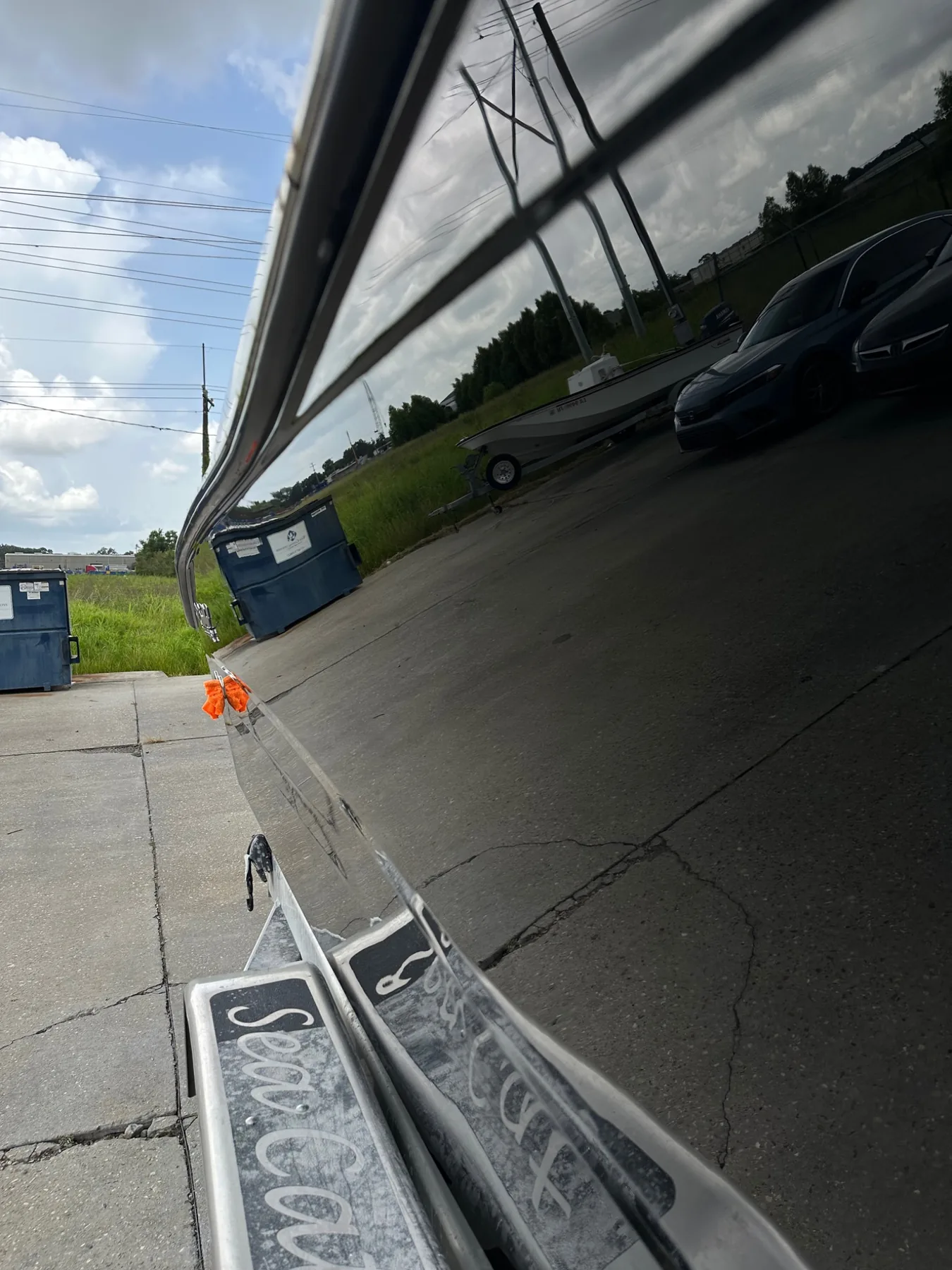
What gelcoat oxidation actually looks like
Gelcoat can lose depth and gloss long before a boat looks “damaged.” Common signs include a chalky feel, cloudy color, faded stripes, uneven shine, and a finish that looks good while wet but quickly turns dull again when dry. On darker hulls, oxidation is often especially obvious because haze interrupts the reflection. On white gelcoat, the change can show up more as a flat, porous-looking surface than a dramatic color shift.
For boat owners around Youngsville, Lafayette, Broussard, and the rest of Acadiana, heat, strong sun, outdoor storage, water exposure, and long gaps between protection can all contribute to a tired finish. The right fix depends on how far the surface has deteriorated.
Polishing, correction, and restoration are not the same thing
A maintenance polish is meant to improve gloss and remove light surface haze. More aggressive correction may be needed when oxidation is deeper, the surface is uneven, or previous attempts have left inconsistent shine. A true gelcoat restoration can involve multiple correction stages, careful inspection, and a protection plan after the finish has been brought back.
The goal is not simply to make the surface shiny for a day. It is to remove or reduce the damaged, oxidized layer evenly enough that the underlying finish can reflect light clearly again. That is why an oxidized boat should be evaluated by condition instead of being forced into a one-size-fits-all package.
When repair may need to happen before polishing
Oxidation is a surface-finish problem. Cracks, chips, gouges, exposed fiberglass, damaged gelcoat, and other structural or cosmetic defects are different issues. If the surface has physical damage, polishing alone cannot repair it. Down South also handles gelcoat and fiberglass repair, so the first review can look at both the finish and the damaged areas rather than treating them as unrelated problems.
Clear photos are useful here. Wide photos show the overall condition, while close-ups help show texture, cracking, oxidation, and repair areas. You can send the project to Seth for a marine quote before deciding what level of work makes sense.
What happens after the finish comes back
Correction without protection leaves the restored surface exposed again. After the finish is corrected, the protection choice should match the way the boat is stored, used, washed, and maintained. Some owners need a straightforward maintenance plan. Others want longer-lasting protection and a more structured upkeep schedule.
The important part is to avoid waiting until the hull is heavily oxidized again. Regular washing, appropriate protection, and periodic inspection make it easier to maintain gloss than to repeatedly recover a severely faded surface.
See real marine work
If you are trying to decide whether your boat needs detailing, correction, restoration, or repair, start with the actual finish. Browse the Down South project gallery, read the guide on boat detailing frequency in South Louisiana, or explore marine detailing and restoration services in Acadiana.